


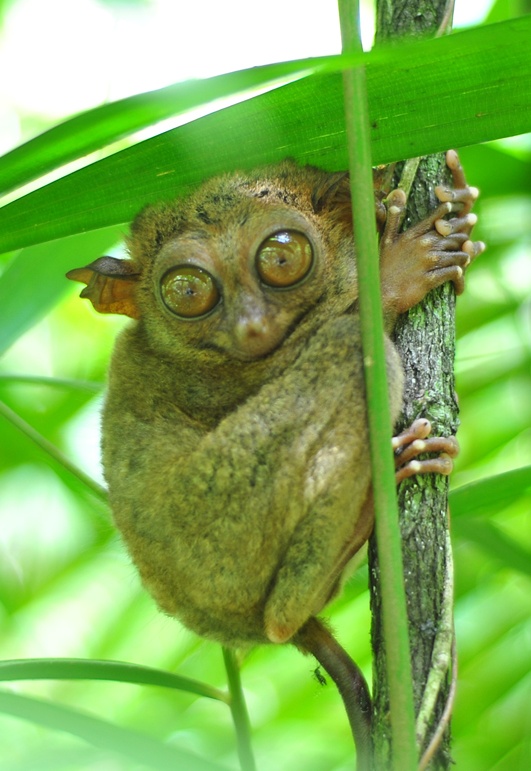
The Philippine Tarsier Foundation, Incorporated (PTFI) is a non-stock, non-profit organization mandated by the DENR in their 1997 Memorandum of Agreement (MOA) to implement the Philippine Tarsier Conservation Program. It is supported by two leading government agencies, to wit: the Department of Environment and Natural Resources (DENR) and the Department of Tourism (DOT).
The Foundation is based in Tagbilaran City and spearheads the individual and corporate membership campaign with the aim of allowing as many local residents as possible to actively support and participate in the Philippine Tarsier Conservation Program and the work of the Foundation.
The Foundation
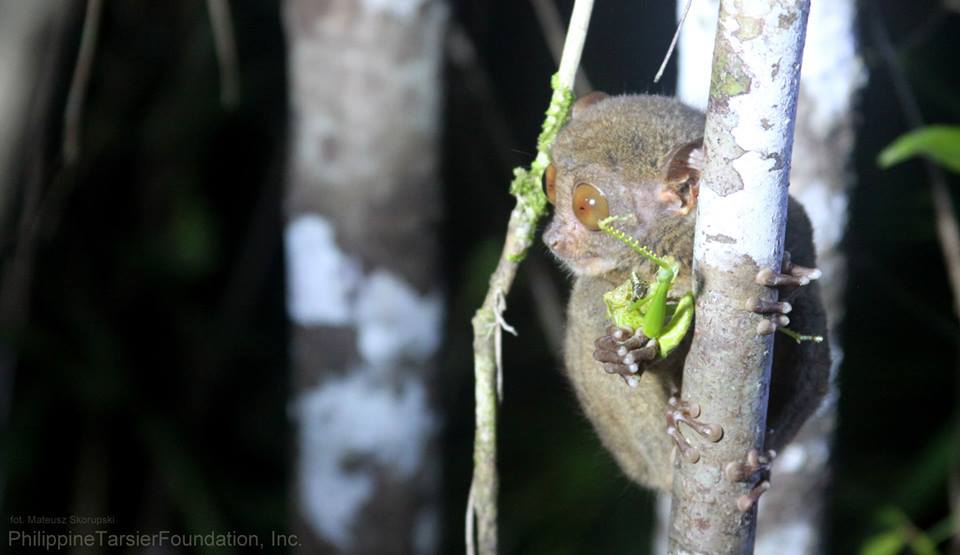
Spearheading the campaign to save the Philippine tarsier is the Philippine Tarsier Foundation, a nonstock, nonprofit organization based in Tagbilaran City, the capital of Bohol. It is an entirely private sector initiative, but enjoys strong support from the country’s two lead government agencies for environmental conservation and ecotourism, namely the Department of Environment and Natural Resources (DENR) and the Department of Tourism (DOT).
The Foundation’s beginnings can be traced to a visit to Bohol by Mr. Jesus Alvarez Jr., former director of the Philippine Parks and Wildlife Bureau, in 1996 on the invitation of local connected citizens. One of the country’s pioneers in nature conservancy field who was primarily instrumental in bringing the plight of endangered Philippine eagle to International attention, Alvarez immediately saw the need for a more organized effort to halt the continuing decline of indigenous tarsier population.
Following the visit, he proposed an initial program of work in that direction wit the following major recommendations.
Establish a body to assume overall responsibility for the whole drive,
Define the parameters of the effort and the role the said body would play therein, Move for the declaration of the Philippine tarsier as an especially protected species by the President of the republic, Identify an appropriate site for the designation as a sanctuary for the species. Alvarez also specified four main areas of activity that the organization to be set up would concentrate on: habitat management and protection; community organization and management; research on ecology and biology of the tarsier; and ecotourism.
Accordingly, on April 17, 1996, the Philippine Tarsier Foundation Inc. was registered with the Philippine Securities and Exchange Commission, with the following prominent Bohol residents listed as incorporators: the Rev. Fr. Florante S. Camacho, SVD, (former) president of the Divine Word College (now Holy Name University); Anos Fonacier, municipal councilor and resort operator; and Col. (Ret.) Zosimo Angan, businessman. They were later joined by Richard Uy, banker, and Marlito Uy, department store owner. Elected principal officers were Fonacier as Chairman; Camacho as president; and Alvarez, who is the only Boholano on board, as executive vice-president.
On November 4, 1996, the Foundation transmitted a formal request to the DENR for the preparation and conclusion for a memorandum of agreement charging the Foundation with implementation of the Philippine Tarsier Conservation Program. Five months later, on April 1, 1997, in recognition of her keen interest in environmental concerns throughout the country, the Foundation invited Tourism Secretary Mina T. Gabor so serve as its honorary chairperson, in which capacity she now functions.
Currently, the Philippine Tarsier Foundation maintains offices both in Tagbilaran and in Metro Manila, which are accessible via postal service, international direct dial telephone/facsimile, and e-mail. Before the end of the year, it will have launched a Philippine Tarsier website in the Internet to provide interested parties with comprehensive and up- to- date information on the species activities being undertaken in its behalf.
Meanwhile, ongoing in Bohol is an individual and corporate membership campaign aimed at allowing as many local residents as possible to actively support and participate in the Philippine Tarsier Conservation Program and the work of the Foundation. This is in firm belief that no undertaking of such nature can flourish without a strong community base.
Subsequently, the campaign will be extended to the rest of the country and abroad, with environmentally involved or aware institutions, agencies, companies and persons foremost in mind.
While for the moment the Foundation is focusing its efforts on Bohol, it hopes eventually to link up with groups similarly engaged in nature conservancy elsewhere in the Philippines, with whom it may jointly develop projects and rare fauna and flora species, and their natural habitats.
Getting Here
Via Public Transport:
- From Seaport or Airport get into a tricycle and tell driver to take you to Sikatuna Jeepney Terminal (This is right infront of Island City Mall). Fare is P100.00 per tricycle.
- From Sikatuna Jeepney Terminal, get into a Jeepney bound to Sikatuna via Corella. (Just anybody there which jeepney passes by Philippine Tarsier Foundation. )This jeepney drops you off to Philippine Tarsier Foundation. Fare is P17.00. Tell the driver of the jeepney that you are headed to Philippine Tarsier Sanctuary in Corella.
- Upon arrival there is a huge signage and rough road, take it and walk for 300 meters to the Research Building where you will pay P60.00 entrance fee and have a guide to show you around the sanctuary and where to see the tarsiers.
- Going Back, just take a jeepney headed to Tagbilaran. And yes it is safe to hitch hike here. Fare is P15.00 for jeepney.
Via Tricycle:
- From Airport or seaport or anywhere in Tagbilaran City, take a tricycle and ask driver to take you to Philippine Tarsier Sanctuary in Corella One way is P150 per tricycle, round trip is P500 when driver waits for you.
Via Car:
- Make sure to contact a trusted travel agency. Tell them to take you to Philippine Tarsier Sanctuary in Corella. Fare is P500 per car and P1,000 round trip from Tagbilaran City.
Feel free to contact us to arrange car for you.
IMPORTANT:
- Bring Rain Coat- weather is unpredictable. The Sanctuary is in the center of forest so rain comes often than in other parts of the island.
- You can put on some insect repellent
- They have a documentary video there. If you have free time, you be happy to watch it.
About the Tarsiers
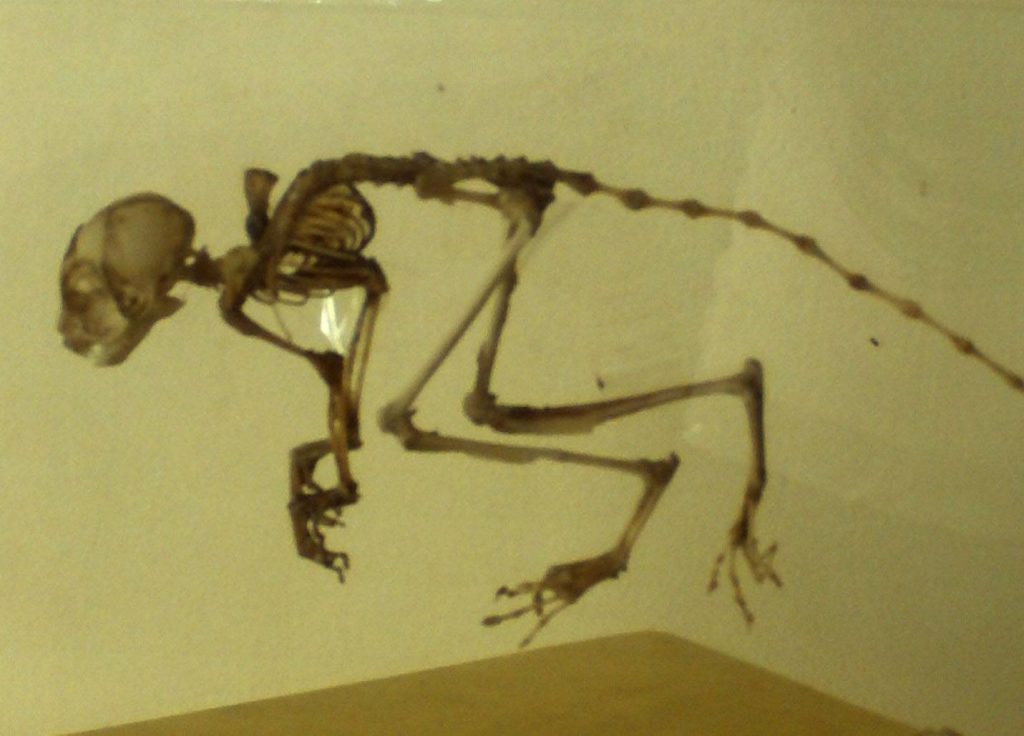
We know that humans usually have a life span that varies depending on the conditions of life. During the Hellenistic period of Ancient Greece, a man reaching the age of 40 would be considered old. Now, it is not surprising to see people aged 70 to 80 years old. Sometimes it is even expected and anything else to be unfortunate.
This got me thinking, how long do Tarsiers live? Considering that they’re wild animals a great many are unfamiliar with, I asked Mr. Carlito Pizarras, the “Tarsier man” for answers on how long these animals live for and what factors affect their life span.
Now Tarsiers, like all living things, have a life span. This life span varies, like us humans, as the conditions of each individual life vary. It is obvious that if we keep animals placed in very small cages where they are unable to move freely to get the proper exercise, most especially if they are wild animals, their life span will be drastically shorter.
In the wild, the Philippine Tarsier can live for as long as 20 to 25 years. Female tarsiers typically live longer than their male counterparts due to their less aggressive nature as compared to their male counterparts. Adult males usually attack other males for territory and marked females, often biting and clawing each other to establish dominance that might result in death. Thus, males often do not last as long as the females. Given that younger, stronger male seeking to usurp territory could very well cause life threatening damage, it is not surprising that males do not reach the maximum expected age that some females might possibly reach.
The Philippine Tarsier has been a recorded life span of 12 years at most in captivity. However, a great many of these Tarsiers die only after a day or at most a few days if kept unhealthily in small cages and/or put under great strain while in captivity. If their places of confinement are not well designed to mimic their ideal habitat, the tarsiers might feel unhealthily, stressed. This does not affect them only in mental terms but also physically as some research has shown that the physical characteristics of Tarsiers kept in captivity mirrors those of much older Tarsiers in the wild.
Ideally, Tarsiers kept in captivity must have an abundance of shrubs, bushes and bamboo, the latter being important as a source of water for Tarsiers. These plants are important to the Tarsier since during periods of rain, the leaves of these plants serve a dual purpose. One of these is to catch the water that Tarsiers use as a source to cool down and to find a refreshing drink while another use for these leaves are a natural roofing from getting directly hit by rain water, which they hate.
In captivity though, they must have a varied diet if they hope to live longer than their projected few days at life. Thus, they require a varied diet of live insects in order to keep them healthy and enough space to chase them around the area. Without such movement and exercise of the hunt, they become lethargic and tired. Like a person who refuses to exercise, the risks of an early death rise dramatically. Considering that for a Tarsier to be healthy it must consume 1/10th of its own body weight, it is not surprising that, given the difficulty in acquiring live insects, captive Tarsiers may be underfed.
Now on the important life moments of the Philippine Tarsier, Sir Carlito Pizarras, explained that the female after mating returns to her own territory and gives birth after six months. She uses another six months to take care of her child. During these six months of growing up, the eyes of the juvenile Philippine Tarsier change from Green/Blue to Brown. The coat also changes from Greyish brown to reddish brown. After six months, the juvenile leaves the mother to find her own territory or fight for one. At reaching one year of age the Philippine Tarsier, if male has visible testicles and gain more male like facial features. However, the male like the female will not reach sexual maturity until around 3 years of age. At which point the Philippine Tarsier is ready to find mates and bear children. The males start to become more aggressive at this age while the females to signal adolescence start to have vaginal swellings with bloody discharge much like menstruation. The age of 5 can be described as the peak age for both genders as they gain their maximum size, growing to four or five inches. They also acquire permanent dentition around this time.
The Philippine Tarsier may have a short life by human standards, however the moments that it lives can, in some way, be found very relatable to us. Thus, we should try not to make their lives any shorter than they already are.
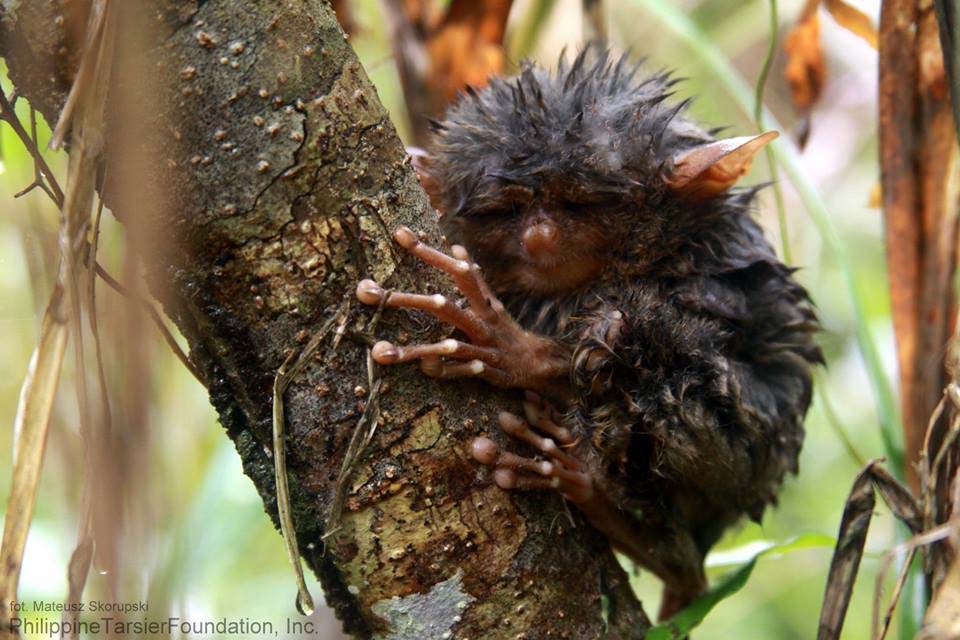
If you have a chance to visit the Tarsier Sanctuary located in the town of Corella, Bohol and decide to see the Philippine Tarsier (C. Syrichta) for yourself, please don’t fret if you only see a few Tarsiers in the enclosure. There is a very good reason for this and one should not be disappointed if one finds the furry prosimian (it’s not a monkey!) few and far between. Information gleaned from the Carlito Pizarras, the “Tarsier Man”, adds light to this frustrating mystery.
The Philippine Tarsier is, unlike some of its Southern cousins, is a very territorial animal that prefers its isolation. Unlike other primates, such as humans that prefer to socialize with other individuals, the Philippine Tarsier loves its personal space. At a whopping 1 hectare per individual it’s no small wonder why these Tarsiers are so difficult to find and pretty alone to boot.
Of course, one might ask how such a small animal could claim a whole hectare as its personal living ground. Well for the most part the Philippine Tarsier, despite having the biggest eye to body ratio of any animal in existence, cannot personally monitor every tiny inch of the whole one area so it is highly likely that the 1 hectare of Tarsier A and the 1 hectare of Tarsier 2 are overlapping. Since the Tarsier takes nightly hunts for food and mates it is not surprising that some intrusions are never noticed and Tarsier A and Tarsier B are only vaguely aware of the existence of the other. If a chance meeting does occur then one tarsier will be forced out of the immediate vicinity at risk of death.
The male Philippine Tarsier is the more solitary of the two sexes as he will attack any male he finds in his territory during his nightly patrols. If he can’t chase the rivals away, he’ll resort to killing his rivals with a quick bite to the neck after wearing them down. The male might even ungentlemanly attack females in his territory if he finds them unattractive or unable to mate with him. The male will mark his territory with a variety of actions ranging from the classic poo droppings to urine sprays. However, the male has a special scent gland located near the stomach called the epigastric gland that it rubs on surfaces to mark its territory.
The female, being the fairer sex, is probably less aggressive and willing to share right? Well, yes and no. It is true that the female is less likely to attack other females she finds in her territory, however this is true only if the environment is abundant with insects. So having satisfied her nutritional requirement and sure that there is more food from where that came from, she will allow other females to enter her territory as long as they return to their respective territory before she sleeps in her area. If resources are not abundant enough, then these females will be just as aggressive as the males, attacking intruders she finds during her roaming in the territory. Similar to the male, the female will mark her territory with fecal droppings and urine. Interestingly though, the mother unleashes a strong scent to mark her territory when she is caring for her toddler and she parks him somewhere to hunt. This serves a dual purpose of directing the toddler back to his mother’s area when the toddler wanders off and warning other tarsiers off the area.
So, don’t be surprised to see two or fewer tarsiers on your visit. You are seeing these animals living peacefully and happily in isolation away from each other, knowing that no other rival will disturb them as they sleep the daylight hours away. After all forcing other tarsiers into a tarsier’s territory where they shouldn’t be in is like forcing another family to live in your family’s living room. You wouldn’t like that at all would you?
To everyone who wishes to help us out, you may send your help directly through the following channels:
PayPal: philippinetarsierfoundation@gmail.com
Bank Deposit via First Consolidated Bank (FCB):
Account Name: Phil Tarsier Foundation
Account Number: 022-0201-026011-2